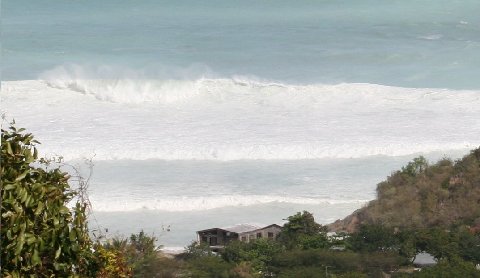
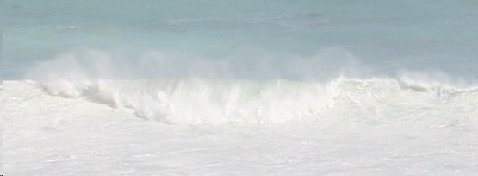
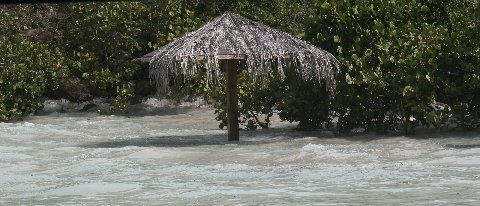
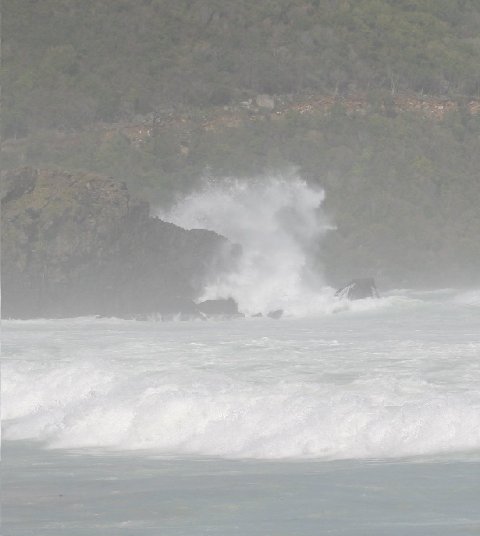
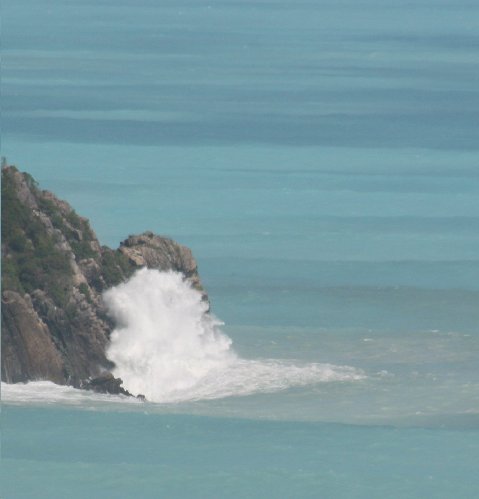
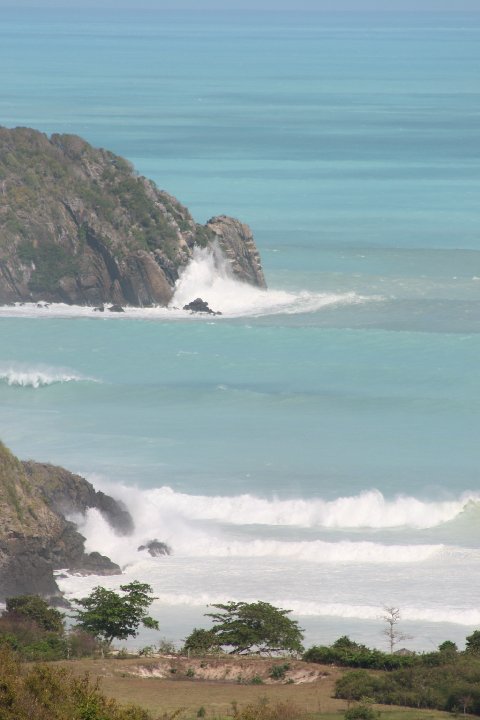
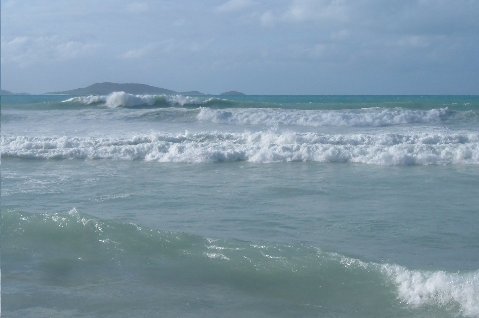
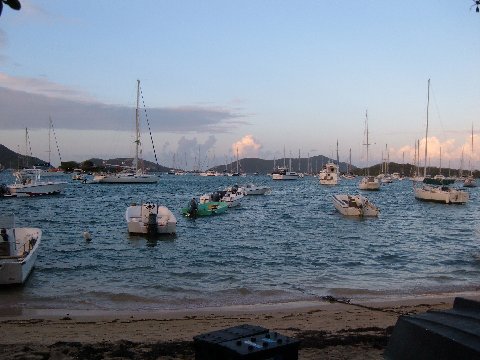
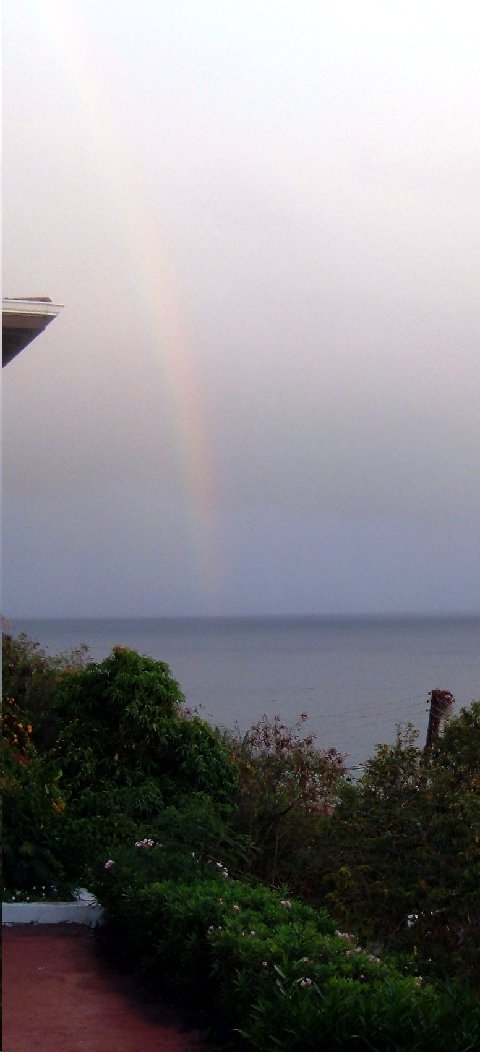
Temperatures are 81f or 27c.
Winds are brisk
Sunshine meter is at 95%
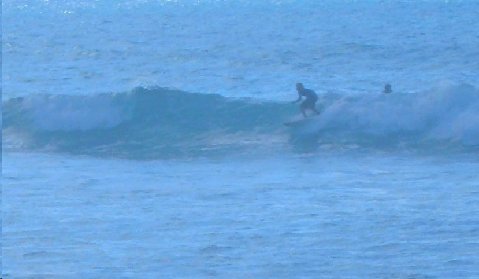
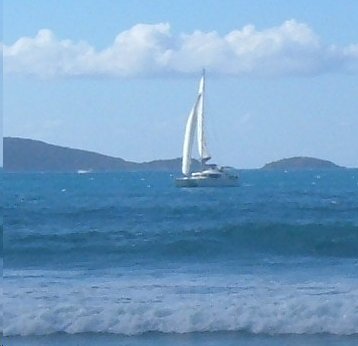
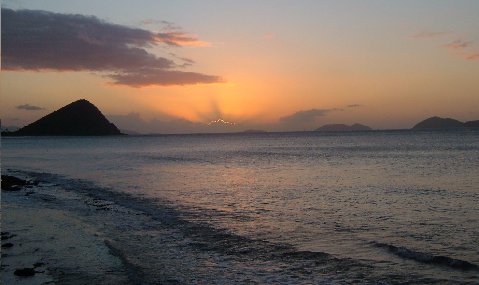
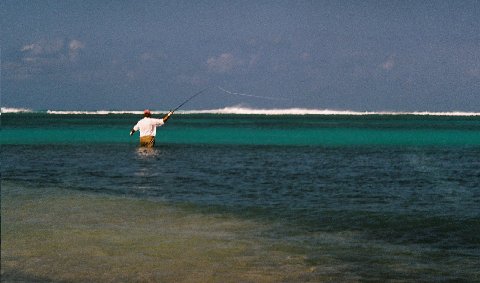
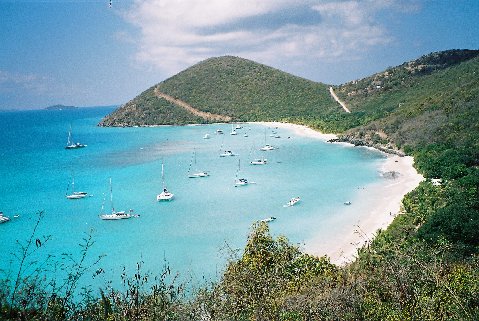
A great day to spend Sunday at the beach!
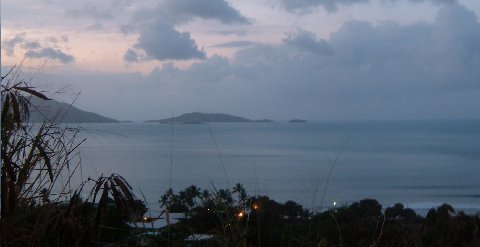
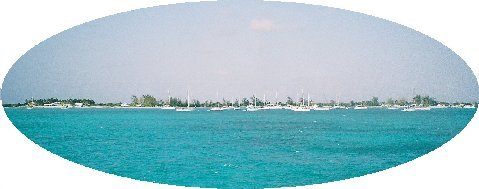
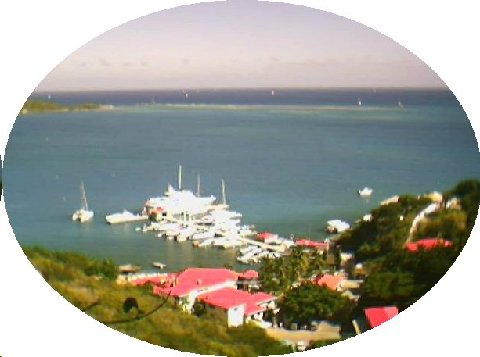
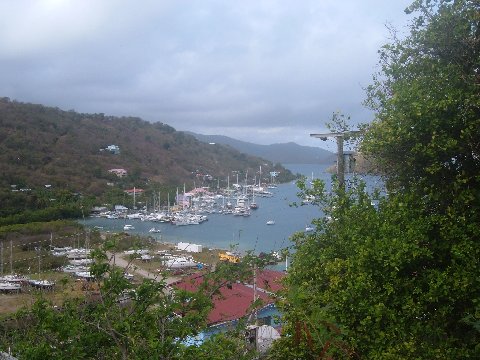
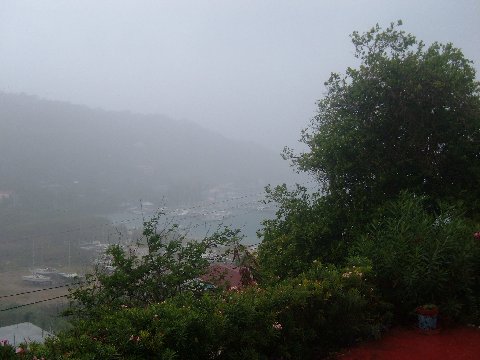
View From the Spy
Glass
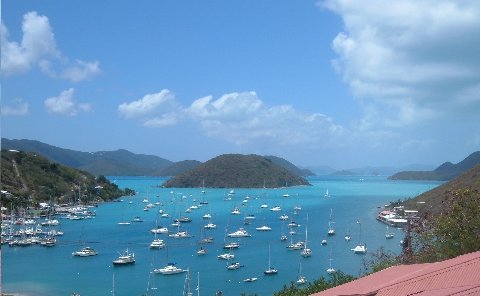
Leverick Bay~
Virgin Gorda ~British Virgin Islands
Christmas has arrived.
At the post office.
What fun to start March off with chocolates! Makes surviving
leap year day seem all the worthwhile.
A while back, my camera died a sudden unexpected death and Drew of
Minnesota graciously has gifted a camera to the Mermaid so that the pictures may
continue! The post office finally delivered it. Of course I have made a
real pest of myself the past 4-5-6 weeks, inquiring about my packages.
The usual postman was not in, but a nice lady was substituting. She
searched and hunted and rearranged her tiny post office and finally found a box
for me! She asked me what was in the box and I said Christmas has
arrived! She laughed and mumbled something like "So Soon?"
*Christmas packages have been known to arrive 6 months
late!"
I feel like I have my wings back, I am so used to walking with the
camera and capturing images. I must get this new fangled one up and running so I
can once again capture glimpses of my world.
"Walking with" is local lingo for carrying something
with you whether you are walking or not. For instance I went into the
phone company and the lady demanded to see my passport.
I said, "I only came from West End to Road Town!"
(Did I cross a dotted line into a foreign
country???)
She scowled at me and replied "Did ya walk with any
Identification?" Of course I had, but I wonder why didn't she ask for
ID instead of demanding a passport. I thought that is why us foreigners were
recently issued expensive picture ID's when obtaining our work permits, so we
could prove (without our passport in hand) that we were legally entitled to live
and breath here.
Once when stopped in a traffic check, I realized I had left my
drivers license in my purse, which I had left on my boat, because
what I needed what stuffed in my pockets and I wasn't planning to drive
anywhere, but a friend had asked me to run them to the store and I had jumped in
the heap of a jeep to do so, without thinking this through. I was
explaining all this to the policeman, with a big grin plastered on my face,
apologizing all the while for my stupid gaffe, when he barked at me "Next
time walk with your drivers license..."
I don't know what is wrong with our BVI post offices. The workers
are nice, but they don't seem to do much about sorting. Yet incredibly, our post
office makes this HUGE profit. Why? Because our stamps are collectors'
items. The only place in the world where British stamps are printed and sold in
US Dollars. Also the designs change constantly so we have gorgeous stamps. Some
are a work of art!
Tourists and philatelists flock to the post office to buy
up our stamps they are never going to use, hence the huge profit the
post office brags about. I don't know why that profit isn't used to hire more
sorters and buy a truck. It seems some ancient broken down 3 legged donkey must
deliver the mail from one end to the other, as the phone bill generally takes
3-4 weeks to go 12 miles and by then it was due 2 weeks ago.
Life in the islands. 
The West End post office is tiny. Maybe 10 by 4 feet total
and it is crammed full of boxes, bags, and envelopes. There is a stack of tiny
cubicles labeled A-Z and that is where the envelopes are sorted. So they have to
pick up a whole stack of letters, then carefully go through them, looking for
the ones you might want.
Packages are stacked all over the place, on top of the cubicles,
under the desk, on the counter and in the corner, on the floor, in
no particular order. The post mistress had to pick up each and every package to
determine if any were for me. At one point she took my phone numbers so she
could call me if she ever found something. About the time we were both going to
give up, she found MY BOX.
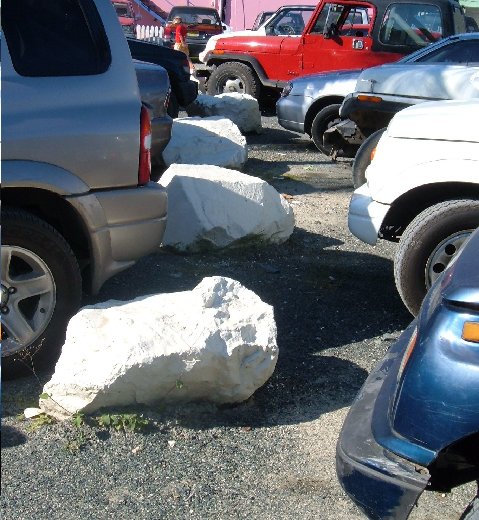
This was a relief because I like many others, simply park illegally
to pick up my mail. The spot is marked off as being illegal, but everyone
going to the post office uses it. If they marked it for postal use, then some
nut would park on it and take off on a ferry for 3 days. So it seems to work to
mark it illegally and then the postal customers who are just there for a few
minutes have a place to park. I've not seen anyone write tickets for using that
spot. Yet.
I've been extremely lucky not to have received any tickets ever on
Tortola. I have been yelled out a few times by those in authority who wanted to
lecture me loudly while I grinned like a fool and admitted I was wrong and
promised better next time.
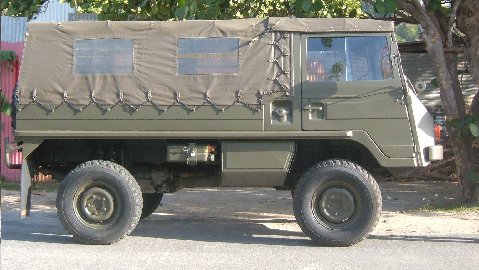
My legendary trusty rusty heap of a jeep is up for sale and it
saddens me to see people look at her with such gleeful lusty eyes.
I've also had to put up with a few ridiculous offers and much abuse.
Local men aren't prepared to deal with a woman who knows a bit
about mechanics. They want to convince me the heap is going to self destruct in
the next 24 hours, if I don't hand it over for some ridiculous sum they are
proffering.
I recently had to calm down a lady friend of mine who was selling
her car, as she had been through all the opportunists who had convinced her that
her car wasn't even safe to drive anymore and was worth practically nothing and
she would be indeed lucky if they bought it at all. I assured her to hold
her ground and a few days later she did get a proper price for her vehicle.
These guys don't stand a chance with me. Apparently we have
opportunists who call about every car for sale. If a woman is selling it, they
dash out and prevail upon her that it is a piece of junk, a time
bomb ready to explode and try to steal a bargain. (Hey maybe I should
try this technique...)
But, back in the dark ages, when I young and lonesome, I worked all
day and went home at night to loneliness.
One day in the paper, I saw the local college had some interesting
night courses including Auto Mechanics for Women Only.
Yep, a class full of women, taught by a male comedian. He was
actually an excellent instructor. He thought, if the class was for women only,
that females would feel more comfortable giving mechanics a try. I had by
this short time in my life, been robbed by quite a few mechanics over my used
heaps that I drove and there were no men in my family mechanically inclined to
prevent this, so I was literally a fish out of water.
Often I had to work late, so my jeans and sweat shirt were in my
car. I cracked up the instructor, on my second night at school, by showing
up 2 minutes late, dashing into the shop in high heels, designer nylons, a
business suit and a silk blouse with my "mechanic" clothes in a paper sack,
inquiring about a quick place to change. I had forgotten to bring shoes and the
shop was a bit chilly, so I had to embarrassingly click clack around in my heels
that 2nd night. After that, a spare pare of shoes lived in my car until I
finished the course.
I showed up for every class, though each week attendance shrunk as
more women dropped out. This enabled the instructor to speed up the course and
teach us even more than he planned on to start with. We learned to work on our
currently owned cars, though 2 enterprising women came to class each week
without a car. They were struggling to make ends meet and thought if they
learned to work on cars, they could eventually buy a cheap heap and keep it
running.
I don't much care for auto mechanics, but it gave me great
knowledge and confidence. I did so well, the instructor made a plea for me
to enroll in the regular mechanics school where he was proud to have already
snagged 2 other women, who were pursuing auto mechanics as a career. I already
had a well paying career at the time, I was just lonesome and tired of being
ripped off; my 2 main reasons for taking the course.
Years later when I bought a hurricane ravaged sailboat and
eventually put a new diesel engine in her, I wasn't afraid to tackle my own
maintenance and save myself thousands of dollars over the years I owned my boat.
I simply mail ordered Nigel
Calder's Boatowner's Mechanical and Electrical Manual and went from
there.
At the time it was his first book ever, by now he has revised that
one several times and put out a long list of others. (If you own a boat
this is a MUST HAVE unless you are filthy rich with very
deep pockets, in that case, ignore my unsolicited advice.) Nigel is able
to somehow translate the technical into layman's terms and the schematics,
drawing and pictures are a huge bonus. Even I could understand most of it, and
if you don't well, it will cure insomnia, as many mornings, I woke up in my
bunk, with my nose still stuck in Nigel's book.
Ditto for my small outboard, I learned the basics of keeping it
running and repaired, so that it never saw a mechanic in the 10+ years I
drove the exact same outboard in my dinghy. I sold that outboard and heard
recently that is was STILL running! Amazing. It must have 15+ years
on it now.
Well, it's time to go play in the sunshine.
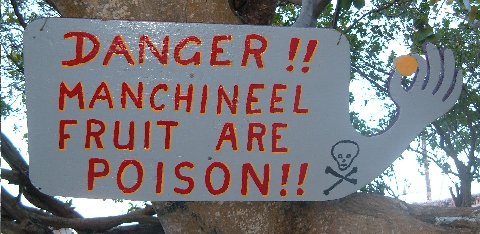
Today's Funny
Sign! (But it is SO true in the islands, mon!)







 .
.